What Veneer Treatment Actually Involves
Patients researching veneers in Turkey often picture a single appointment that transforms a smile. In reality, veneer treatment is a planned sequence: assessment, design, approval, preparation, production and fitting. Each stage exists for a reason, and skipping any of them is where poor outcomes originate. A veneer is a thin ceramic layer bonded to the front surface of a tooth, designed to correct colour, shape, minor rotation or small gaps while preserving as much natural structure as possible. It is not a treatment for structurally compromised teeth, which require full coverage instead. Understanding this distinction before you travel helps you assess whether the plan you have been offered is appropriate. Our approach is described on our veneers page.
Before You Travel: Assessment and Suitability
Preparation begins at home. Send clear photographs of your smile from several angles, along with any recent X-rays, and describe what you want to change. From this, a clinician can give a provisional opinion on whether veneers suit your case, how many teeth are likely to be involved and how long a stay you should plan. Importantly, this stage should also flag anything that needs resolving first. Active gum disease, untreated decay, failing old restorations or a significant bite problem must be addressed before any cosmetic work, because restorations placed over unhealthy foundations do not last. If you intend to whiten your natural teeth, that should also happen before shade matching, since ceramics do not respond to whitening agents.
Day One: Examination and Digital Design
Your first clinic day is devoted to assessment and planning rather than preparation. A full examination covers the teeth, gums and bite, and photographs are taken in standardised lighting. An intraoral scanner captures a three-dimensional record of your mouth, which is more comfortable and more accurate than conventional impressions. The clinician then produces a digital smile design, setting tooth proportions, length, midline and the relationship between your smile line and your lips. This is the point at which the plan becomes specific: which teeth will be treated, which will be left alone, and what material each will receive. The technology behind this stage is explained on our smile design page.
The Mock-Up: Seeing It Before It Is Permanent
The mock-up is the single most valuable stage of veneer treatment and the one patients should never agree to skip. A temporary version of the approved design is placed directly onto your teeth, allowing you to see the proposed result in your own face, speak with it and assess it in daylight rather than under clinic lighting. At this point length, shape, width and smile line can all be changed, and you can ask for something more conservative or more prominent. Nothing irreversible has happened yet. Only once you approve the mock-up does preparation begin. Clinics that move straight from consultation to preparation remove your opportunity to influence the outcome, which is precisely where dissatisfaction tends to arise.
Preparation, Temporaries and Production
Preparation follows the approved design rather than a standard template, which is why the mock-up matters so much. In suitable cases only a very thin layer of enamel is reduced from the front surface, and in some cases preparation is minimal. Temporary veneers are then fitted, protecting the teeth and maintaining appearance while the definitive restorations are made. Production takes place in the laboratory, where the design is milled from a ceramic block, finished by hand and characterised for shade. A clinic with an in-house laboratory can complete this within your stay and adjust anything that needs refining the same day. Ask, before booking, whether restorations are made on site or sent to an external facility.
Try-In, Bonding and Final Checks
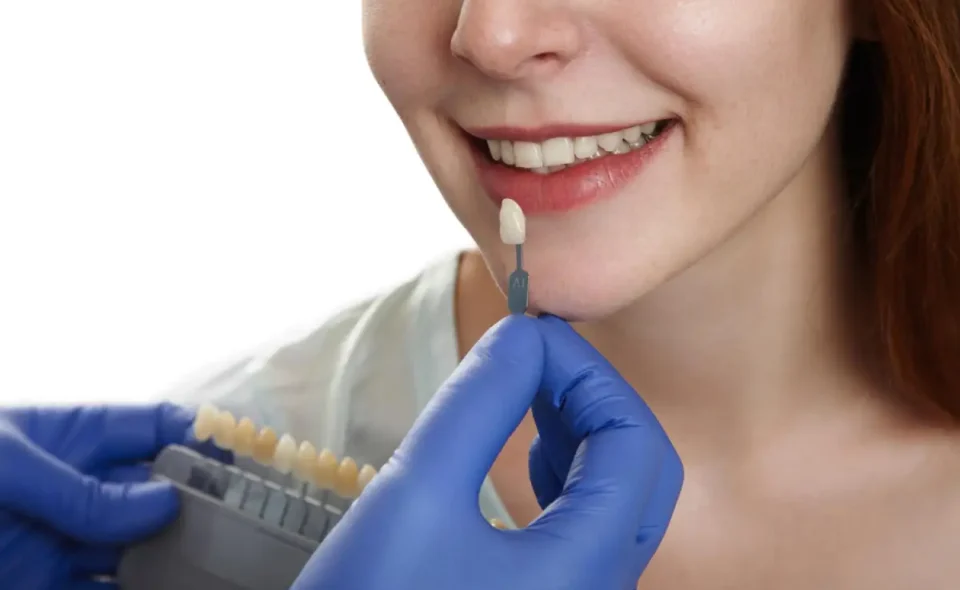
Before anything is bonded permanently, the finished veneers are tried in. Fit, contact points, shade and appearance are assessed together, and you look at them in a mirror in natural light. Adjustments at this stage are normal and expected. Once you approve them, each veneer is bonded using a specific protocol involving surface conditioning, adhesive and light curing, which is what gives the restoration its strength. The bite is then checked carefully and refined, because an uneven bite concentrates force on individual veneers. You leave with written aftercare instructions and, where clenching is present, a recommendation for a night guard. The materials used at this stage are covered on our E-max veneers page.
Aftercare and Long-Term Maintenance
Veneers last when the teeth and gums beneath them stay healthy. Brush twice daily with a non-abrasive toothpaste, clean between teeth every day to protect the margins, and attend check-ups roughly every six months. Avoid biting hard items with restored front teeth and never use teeth as tools. If you clench or grind, wear the night guard consistently; most chipping arises from parafunctional force rather than material failure. Take your treatment plan and guarantee document home and share them with your dentist in the UK so future maintenance is straightforward. Ask before you travel what the guarantee covers, how long it lasts and what is expected of you under its terms.
Conclusion
Veneer treatment in Turkey works well when it follows a proper sequence: honest assessment of suitability, resolution of any underlying gum or decay problems, digital design, a mock-up you approve, conservative preparation, precise production and a careful try-in before bonding. The mock-up stage is your main protection against an unwanted result, so insist on it. Send us photographs of your smile and any recent X-rays and our clinical team will assess whether veneers are appropriate for your case.
Frequently Asked Questions
How long do I need to stay in Turkey for veneers?
Veneer treatment usually requires several days to allow for design, preparation, temporaries, try-in and final bonding.
How much tooth is removed?
In suitable cases only a thin layer of enamel from the front surface. Preparation should follow the approved design, not a standard template.
Can I see the result before treatment?
Yes. A mock-up places the design on your teeth so you can assess and adjust it before any irreversible preparation.
Are veneers suitable for everyone?
No. Teeth that are heavily restored, root-treated or significantly damaged generally need full-coverage crowns instead.
Should I whiten my teeth first?
Yes, if you plan to. Ceramics do not respond to whitening, so shade matching should follow any whitening treatment.
What if I have gum disease?
It must be treated first. Restorations placed over inflamed gums have compromised margins and a shorter lifespan.
Do veneers stain?
The ceramic surface resists staining, though natural tooth structure at the margins can discolour, which is why daily interdental cleaning matters.
What if I grind my teeth?
A night guard is strongly recommended. Grinding forces exceed normal chewing loads and are the most common cause of chipping.
Can veneers be repaired if one chips?
Small chips can sometimes be polished or repaired, but significant damage usually requires replacement of that veneer.
What documentation should I take home?
Your treatment plan, the materials used and the guarantee document, all of which your dentist in the UK may need.