What E-max Actually Is
The name attached to E-max veneers refers to lithium disilicate, a glass ceramic used widely in aesthetic dentistry. Its reputation rests on the way it handles light. Natural enamel is translucent rather than opaque, transmitting light and creating the sense of depth that makes a tooth look alive. Lithium disilicate reproduces that behaviour closely, which is why it performs so convincingly on front teeth where the result is examined from every angle. It is also strong for its thickness, allowing thin restorations that require minimal preparation of the underlying tooth. Understanding what the material does well, and where it is less suitable, is the starting point for deciding whether it fits your case. Our approach is described on our E-max veneers page.
Who Is a Good Candidate?
The strongest candidates are patients whose teeth are structurally sound but whose appearance they want to change. Typical indications include permanent discolouration that does not respond to whitening, small gaps between teeth, minor rotations or misalignment, chipped incisal edges, uneven tooth lengths and worn enamel in the aesthetic zone. Healthy gums and a reasonably stable bite are prerequisites. These patients benefit most because the restoration can be thin, the preparation conservative, and the bond made largely to enamel, which is the most reliable bonding surface available. In other words, the ideal candidate needs an aesthetic change rather than a structural repair, and has enough of their own tooth left to support a thin restoration.
When Another Solution Serves Better
Lithium disilicate is not the right answer everywhere. Teeth that have been root-treated, heavily filled, fractured or significantly worn have lost the structure a thin bonded restoration relies on, and full-coverage crowns are usually the safer option. Molars carrying heavy chewing loads and multi-unit bridges are generally better served by zirconia, which offers higher fracture resistance. Implant-supported restorations also tend to use zirconia for the same reason. Patients with severe crowding should consider orthodontic treatment first rather than masking alignment problems with restorations. Where strength dominates the requirement, the alternatives are set out on our zirconium crowns page.
Preparation and Enamel Preservation
How much tooth is removed matters more than any material debate, because enamel cannot be replaced. In suitable cases, preparation for a lithium disilicate veneer involves reducing only a thin layer from the front surface, and in some minimal-preparation cases very little at all. Preserving enamel has two clear benefits: bonding to enamel is more durable than bonding to the dentine beneath it, and a conservatively prepared tooth retains more of its own strength, reducing the chance of needing root treatment later. When assessing a clinic, ask to see preparation-stage photographs from previous cases rather than only polished final images. What a clinic is willing to show you at that stage tells you a great deal about its philosophy.
Getting the Shade Right
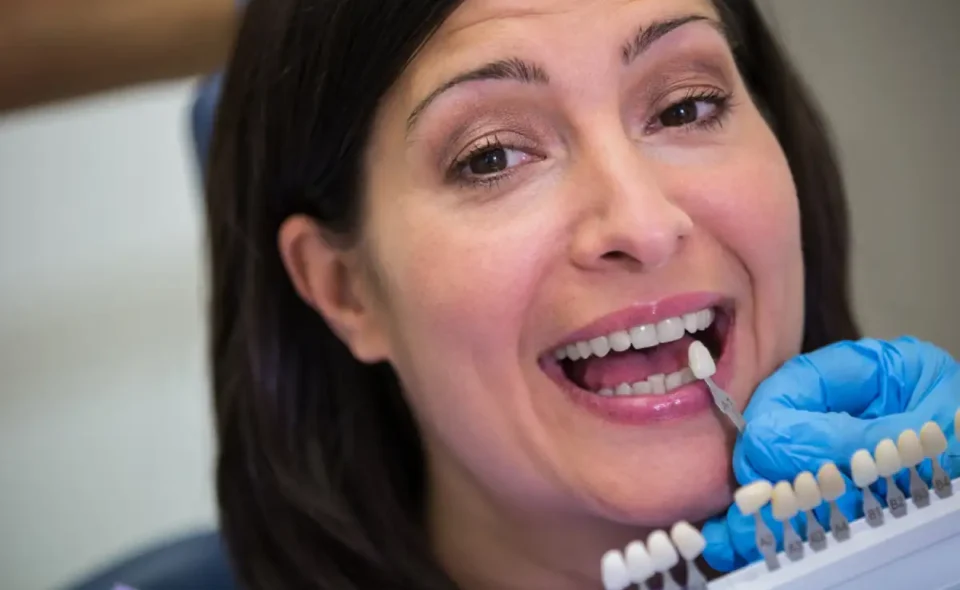
Shade matching is where lithium disilicate either excels or disappoints, and the difference lies in how the case is handled. The material’s translucency means the underlying tooth influences the final appearance, so a very dark or discoloured tooth may show through a thin restoration. In those cases the clinician may adjust the ceramic’s opacity, alter the preparation or recommend a different approach altogether. Shade should be chosen with you present, in appropriate lighting, and confirmed at the try-in stage before bonding. Where the technician can assess your natural teeth directly, surface texture and internal characterisation are reproduced far more reliably. This is one of the practical advantages of an in-house laboratory.
The Treatment Sequence
Treatment follows a defined order. Examination and photographs come first, followed by intraoral scanning and digital design. A mock-up then places the proposed result onto your teeth so you can approve or adjust the length, shape and smile line before anything irreversible occurs. Preparation follows the approved design, temporaries are fitted, and the definitive restorations are produced. At the try-in, fit, contacts and shade are assessed together before the veneers are bonded using a controlled adhesive protocol. Finally, the bite is checked and refined. Each stage protects the one after it, which is why a compressed timeline that omits the mock-up should be questioned. Treatment stages are outlined on our veneers page.
Longevity and Aftercare
Well-planned lithium disilicate restorations serve for many years, and longevity depends on three things: the quality of the bond, the balance of the bite and your maintenance. Brush with a non-abrasive paste, clean interdentally every day to protect the margins, and attend check-ups roughly every six months so that early changes are caught. Avoid biting hard objects with restored front teeth and never use them as tools. If you clench or grind, wear a night guard consistently, as parafunctional forces are the leading cause of chipping. Keep your treatment plan, material details and guarantee document and share them with your dentist at home. Documented cases can be reviewed on our E-max veneers in Turkey page.
Conclusion
Lithium disilicate veneers suit patients whose teeth are sound but whose appearance needs changing, particularly in the front of the mouth where translucency matters most. They are less appropriate for heavily compromised teeth, molars under heavy load, bridges and implant-supported work, where zirconia is generally the better choice. Insist on conservative preparation, a mock-up you approve, shade confirmation at try-in and a written guarantee. Send us photographs of your smile and our clinical team will advise whether this material suits your case.
Frequently Asked Questions
What is E-max made from?
Lithium disilicate, a glass ceramic valued for its translucency and its strength relative to its thickness.
Who is it most suitable for?
Patients with structurally sound teeth who want to change colour, shape, minor alignment or small gaps in the aesthetic zone.
Is it suitable for back teeth?
Generally zirconia is preferred for molars and bridges because of its higher fracture resistance under heavy chewing loads.
Can it be used on root-treated teeth?
Usually not. Teeth that have lost significant structure are better restored with full-coverage crowns.
How much enamel is removed?
In suitable cases only a thin layer, and in minimal-preparation cases very little. Preparation should follow the approved design.
Will a dark tooth show through?
It can, because the material is translucent. Opacity can be adjusted or an alternative approach recommended in those cases.
When is the shade chosen?
With you present, in appropriate lighting, and confirmed at the try-in stage before final bonding.
Do these veneers stain over time?
The glazed ceramic surface resists staining. Margins and adjacent natural tooth structure still need daily cleaning.
How long do they last?
Longevity depends on bond quality, bite balance and maintenance. Daily cleaning, regular reviews and a night guard where needed extend their life considerably.
What causes chipping?
Most commonly grinding, clenching or biting hard objects rather than failure of the material itself.